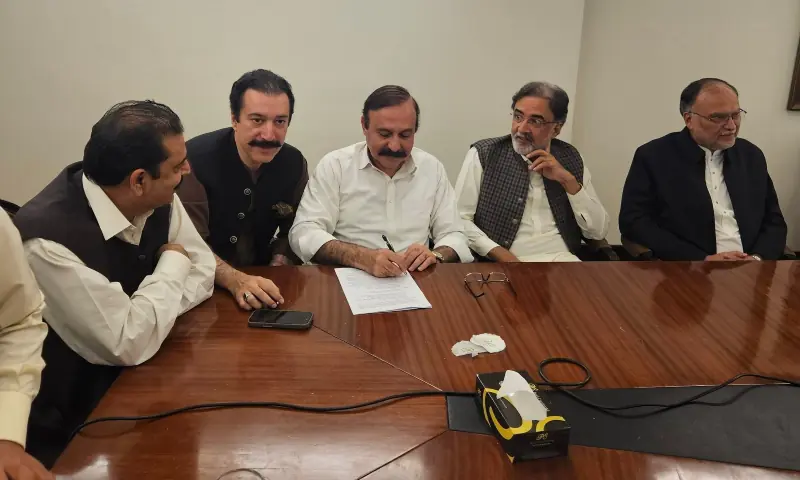
JAAC agreement Azad Kashmir protests, A top-level federal delegation inked a deal with the Joint Awami Action Committee (JAAC) to put an end to turmoil in Azad Jammu and Kashmir (AJK).
Prime Minister Shehbaz Sharif said the government settled all problems with JAAC amicably, bringing relief to the conflict-hit area.
Background of the Agreement
The agreement came after two rounds of negotiations between government ministers and JAAC leaders within two days.
Negotiations had previously collapsed on elite privileges and refugee seats, provoking mass protests throughout Azad Kashmir.
Protests started off peacefully but turned violent later, claiming at least 10 lives and leaving dozens severely injured.
The Human Rights Commission of Pakistan (HRCP) criticized the excessive use of force by law enforcement against protesters and condemned the violence.
Federal Minister Confirms Agreement
Parliamentary Affairs Minister Tariq Fazal Chaudhry approved the signing of the pact in an X post.
Protesters are going home, roads are open, and peace is slowly being restored in Azad Kashmir, he said.
The minister called the agreement a victory of peace, posting the signed document enumerating 12 decisions and 13 other points.
Key Points of the Agreement
The pact stated that FIRs would be registered under the Anti-Terrorism Act (ATA) for violent incidents causing deaths.
A judicial commission would be appointed where necessary to investigate violent events and ensure accountability.
Families of those killed on October 1 and 2, 2025 would receive financial compensation equal to law enforcement personnel.
Each gunshot victim would receive Rs1 million as compensation.
Moreover, a government employment would be allotted to a relative of each victim within 20 days.
Government Negotiation Team
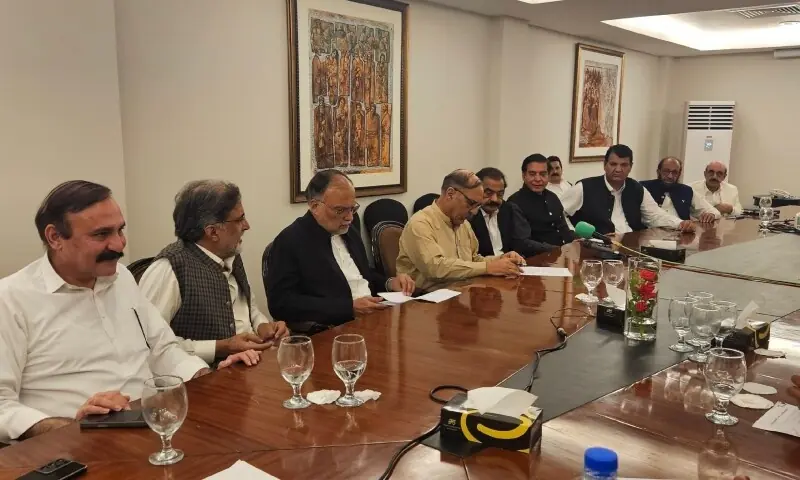
Federal negotiation team consisted of Tariq Fazal Chaudhry, Amir Muqam, Rana Sanaullah, Ahsan Iqbal, Sardar Yousaf, Qamar Zaman Kaira, and others.
From AJK government, Education Minister Diwan Ali Chugtai and Local Government Minister Faisal Rathore participated.
JAAC representatives were Raja Amjad, Shoukat Nawaz Mir, and Anjum Zaman Awan.
Root Cause of the Protests
The standoff commenced on September 25 on the issue of elite privileges and quota seats for refugees in AJK administration.
JAAC called a shutter-down strike, bringing the area under a communications shutdown.
They kept protesting for the acceptance of their 38-point charter of demands, which received huge popular support.
Prime Minister’s Statement
Prime Minister Shehbaz Sharif hailed the deal, declaring, “We have buried conspiracies and regained peace.”
He praised the government team and JAAC leaders for resolving problems through dialogue.
Shehbaz Sharif ensured that the government would safeguard the rights of Kashmiri citizens at all costs.
He requested people not to listen to rumors or false information, highlighting the pledge to public service and harmony.
Reaction of Ahsan Iqbal
Federal Minister Ahsan Iqbal stated the agreement demonstrated “Pakistan, AJK and democracy wins.”
He observed that protests showed genuine public interest in governance and prices.
Iqbal appreciated the sense of leadership and culture of dialogue for facilitating a peaceful resolution.
He remarked, “Instead of confrontation, we chose consultation. Instead of egos, we chose empathy.”
Why This Agreement Matters
JAAC agreement Azad Kashmir protests, JAAC had given voice to citizens besieged by inflation and bad governance in AJK.
The decision of the government to hear and reply peacefully is a new phase in Kashmir’s democratic movement.
People regard this agreement as a gigantic triumph of dialogue, peace, and grassroots activism in Azad Kashmir.